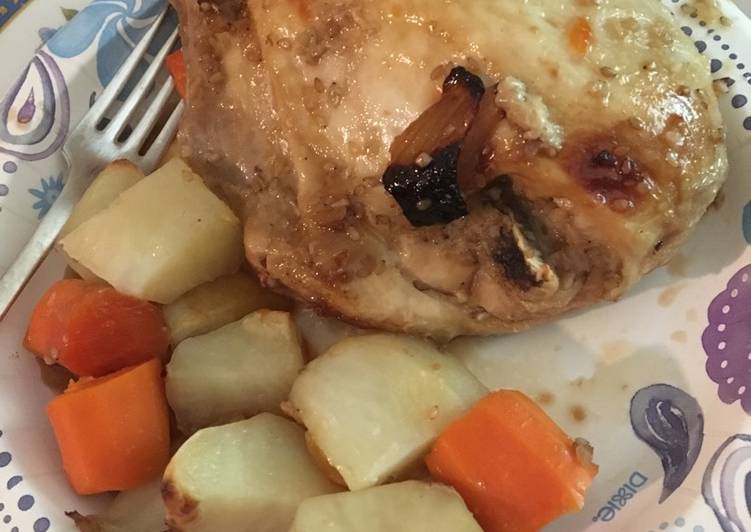
Roasted Split Chicken Breast & Roasted Veggies. Rub chicken breasts with olive oil and garlic; sprinkle with salt, black pepper, rosemary, and basil. This Roasted Chicken Breast recipe is going to make you look like a star in the kitchen! Split Chicken Breasts are juicy and tender on the inside, with a delicious crispy, herb-crusted skin on the outside, roasted chicken never tasted so good.
 Use just enough to coat chicken.
Crushed dried rosemary - Rosemary and chicken go well together, If you have fresh herbs you may substitute them.
Bone-in chicken breasts (aka split chicken breasts) are way cheaper than boneless skinless chicken breasts.
You can have Roasted Split Chicken Breast & Roasted Veggies using 8 ingredients and 5 steps. Here is how you achieve it.
Use just enough to coat chicken.
Crushed dried rosemary - Rosemary and chicken go well together, If you have fresh herbs you may substitute them.
Bone-in chicken breasts (aka split chicken breasts) are way cheaper than boneless skinless chicken breasts.
You can have Roasted Split Chicken Breast & Roasted Veggies using 8 ingredients and 5 steps. Here is how you achieve it.
Ingredients of Roasted Split Chicken Breast & Roasted Veggies
- It's 3 tablespoons of teriyaki sauce.
- Prepare 1 of large Chicken breast.
- Prepare 1 of large sweet onion chopped.
- You need 3 of carrots cleaned and chopped.
- It's 3 of potatoes cleaned peeled and chopped.
- It's 3 cloves of Garlic.
- Prepare Dash of sea salt.
- Prepare of Pepper.
By roasting the chicken on the bone with the skin on, you are left with a more flavorful and juicier chicken breast. No one likes a dry chicken breast. Bone-In Oven Baked Split Chicken Breasts are an easy weeknight meal with crispy skin that are also perfect for any recipes calling for cooked chicken!. Split Chicken Breast, sometimes referred to as Bone-In/Skin-On, Half or Chicken Breast with Ribs Attached, are simply whole chicken breasts with the ribs and skin intact.
Roasted Split Chicken Breast & Roasted Veggies instructions
- Preheat oven to 400 degrees.
- Oil a baking dish.
- Place chicken and vegetables in the dish.
- Cover with foil, cook for 40 minutes on 400 degrees covered, uncover the last 20 to 30 minutes..
- Or until Chicken is done.
A whole chicken breast (a large, heart-shape cut of meat - including both sides of the chicken) is literally "split" in two. When you choose bone-in, skin-on chicken breast halves, the game changes. Sure, they take longer to cook than their boneless kin, but the bone helps even heat distribution, while the skin protects the interior so the meat is juicy after cooking -- and there's. That's because you remove the back bone, then break the breast bone to allow the whole bird to lie flat on the roasting pan. Detailed directions for how to do that are below.