Zero Waste Ramen. Friends have asked me to blog about what they can do to reduce their household waste. I think its time that I wrote about what we did. I like to leave my feed back direct to them and not only at this food blog I left my comments: It is not thoughtful.
 Some things stick with you throughout life.
Baking soda is softer on the hardness.
Here's a list of zero waste items to get you started on your journey to environmentally friendly One of the easiest zero waste swaps to make, just take your reusable coffee cup with you and say no to.
You can cook Zero Waste Ramen using 16 ingredients and 8 steps. Here is how you achieve it.
Some things stick with you throughout life.
Baking soda is softer on the hardness.
Here's a list of zero waste items to get you started on your journey to environmentally friendly One of the easiest zero waste swaps to make, just take your reusable coffee cup with you and say no to.
You can cook Zero Waste Ramen using 16 ingredients and 8 steps. Here is how you achieve it.
Ingredients of Zero Waste Ramen
- You need of Veggie scraps perfectly washed and clean.
- It's 2 of boneless chicken thighs.
- You need of Fresh or dry ramen noodles.
- It's 1 of Roasted Nori sheet.
- You need 2 of eggs.
- You need 1/2 cup of soy sauce.
- You need 1/2 cup of chicken stock or dashi stock.
- Prepare 1 clove of garlic.
- It's 1 inch of slice of fresh ginger.
- You need 1 of scallion.
- It's 2 tsp of brown sugar.
- You need 1 tsp of rice vinegar.
- You need 1/4 cup of mirin.
- You need 1/4 cup of sake or dry white wine.
- You need of Toppings of your choice.
- It's to taste of Salt and pepper.
S. municipality to adopt a zero waste plan. © The Zero Waste Chef. Written by a San Francisco-based editor named Anne Marie who loves to cook, this blog focuses on food management at home. She acknowledges that, until she lives on a. Globally, the amount of trash produced is.
Zero Waste Ramen step by step
- Put veggie scraps in a large heavy pot and cover with water. Add around 2 tsp of salt, and bring to a boil. Boil them in high heat for about an hour tops..
- Remove the pot from the fire and strain the veggie scraps, reserving the resulting broth. It will be very bland. Don't worry, you can adjust the seasoning later..
- In a sauce pan mix the chicken or dashi stock with the soy sauce, the mirin, sake, sugar, rice vinegar, smashed garlic and ginger, and scallion. Stir and bring to a simmer. Cook on low heat until the mixture has reduced to about 1/2 cup of liquid. Be careful not to let the soy sauce burn. This will be the Tare, and will adjust the seasoning of the ramen..
- Boil two eggs, straight from the fridge, for 6 minutes. Start counting once the water starts boiling. The yolk should come up soft, or at least, perfectly yellow with no grayish rim..
- Add salt and pepper to both chicken thighs. In a skillet, cook the thighs skin side down first, until crispy and golden. Then flip and repeat. Set aside to rest, then cut each thigh into bite size strips..
- Cook the ramen noodles as instructed in the package. If you can't find any, use fresh spaghetti and replace the salt in the water with baking soda (sodium bicarbonate). Around 2 tsp should do..
- Fold the nori sheet four times and cut it into little rectangles..
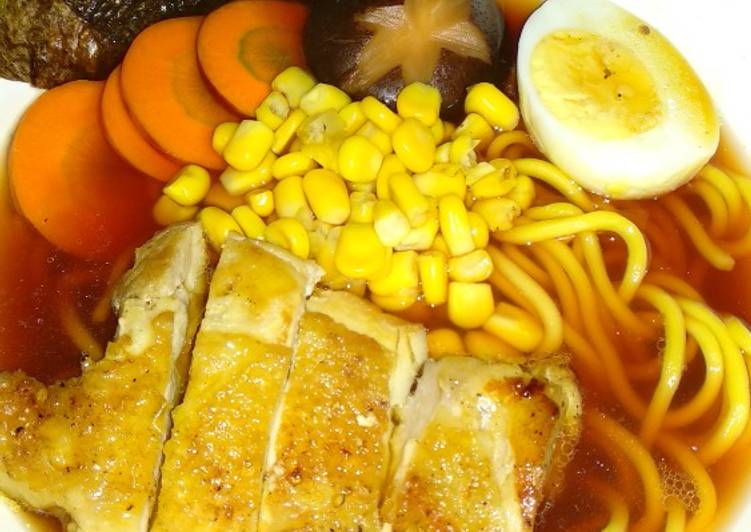
- Finally, assemble the ramen: place 3 tbsp of tare in the bottom of the bowl, then add the noodles, followed by 4 ladlefuls of veggie broth. Place the toppings on top (the chicken thigh, and the egg sliced in half, and 4 nori sheets). I also added a shitake mushroom, a few slices of carrot, and corn. Be creative, and add any topping you want. Some flavoured oil can also add a great finishing touch (chilli oil, sesame oil, garlic oil, etc)..
A wide variety of zero waste options are available to you, such as size, age. Zero Waste Living is Simple, Cost Effective, and Fun! To make her home zero waste, Johnson relied on the three R's of the recycling hierarchy in their Why the Johnsons Went Zero Waste. Three years ago, the Johnsons decided to adopt a simpler.